
Don’t Get A Bone Scan Until You Have Read This….
If you’re a woman in midlife and you’re wondering whether you should have your bone density checked, you might assume the first step is simply to ask your GP for a bone scan…..
However it’s not quite that simple!
There are different assessments and knowing what to ask for can make the process less confusing.
1. Start with your fracture risk — not just your bone density
In the UK, the usual starting point for women after menopause who have risk factors for osteoporosis is a FRAX assessment. FRAX estimates your 10-year probability of having a major osteoporotic fracture and of having a hip fracture. It takes into account things such as your age, previous fractures, family history of hip fracture, smoking, alcohol, certain medications and other risk factors.
Your GP can carry out a FRAX assessment and, depending on the result, it may indicate that you need a DEXA bone scan. If you’re wondering whether you qualify for a scan through the NHS, there is also a simplified version of this that the Royal Osteoporosis Society have on their website which will give you a good idea of what questions the FRAX assessment asks and a starting point with your GP: Check Your Risk
2. If you have a DEXA, what will the results actually tell you?
A DEXA measures bone mineral density (BMD), usually at the lumbar spine and hip. You will see a number called a T-score.
This compares your bone density with that of a healthy young adult.
T-score:
-1 or above: normal range
Between -1 and -2.5: low bone density, osteopenia range
-2.5 or below: osteoporosis range
But here’s the important bit; Your T-score is NOT your fracture risk. You can have a T-score in the osteopenia range and still have a relatively high fracture risk. And your fracture risk isn’t determined by the T-score alone.
Your age, previous fractures, family history, medications and other risk factors all contribute to the bigger picture. This is why a DEXA result should be considered alongside your FRAX assessment and other risk factors.
What about your Z-score? You may also see a Z-score on your report.
This compares your bone density with people of a similar age. For most postmenopausal women, the T-score is the more relevant number when classifying bone density.
3. Ask about TBS
This is something I think more women should know about.
TBS stands for Trabecular Bone Score.
It isn’t another scan.
It’s calculated from the images produced during a lumbar-spine DEXA and provides additional information about the structure of the trabecular, or spongy, bone. Think of it as adding another piece to the picture:
DXA → bone mineral density
TBS → information about trabecular bone structure
TBS can be incorporated into fracture-risk assessment and can provide additional information beyond BMD alone. BUT you won’t automatically get a TBS score with every DEXA. So if you’re having a private DEXA, do ask if they offer TBS.
If you’re having a scan through the NHS, it’s worth asking whether TBS is available at that centre, but don’t be surprised if it isn’t routinely offered.
4. What is VFA?
You may also come across VFA — Vertebral Fracture Assessment.
This uses the DEXA machine to produce an image of your spine and look for vertebral fractures. This matters because vertebral fractures can sometimes happen without an obvious accident or even without you knowing you’ve had one.
A previous vertebral fracture can significantly change how your fracture risk is assessed. VFA isn’t necessary for everyone, but if you have certain risk factors, such as height loss, unexplained chronic back pain it’s worth asking for one.
5. What about REMS?
You may have come across REMS if you’ve been researching bone health. REMS stands for Radiofrequency Echographic Multi-Spectrometry.
It’s an ultrasound-based technology that doesn’t use ionising radiation and can assess bone at the hip and lumbar spine. It can produce BMD measurements similar to a DEXA scan but the interesting bit is it can provide a Fragility Score. This is additional data on bone microarchitecture and quality alongside density.
From everything I’ve researched those that have had a REMs scan seem to be getting different results on their likelihood to fracture. In many cases this can be a positive improvement because it’s looking at bone quality not just density.
This may give you more reassurance on your likelihood to fracture but the jury is still out on how reliable this scan is! Please also remember this is just my anecdotal research and not medical opinion.
I’ve also seen that REMs is less accurate if you are very slim or a larger build.
It’s a developing technology, but at the moment, DEXA remains the established method for measuring bone mineral density, and REMS isn’t routinely offered through the NHS or easy to find privately.
So if you’re paying privately, I’d prioritise getting a properly performed and interpreted DEXA, and asking whether TBS is available, before paying for REMS.
BUT saying all of that its still something I’m considering. Let me know if you have had a REMs scan and your experiences with it.
And don’t forget your previous scans
If you’ve had a DEXA before, don’t just look at your new T-score and compare it with the old one yourself. Have your previous scan available so that the clinician can compare the results properly.
Ask whether the change in your BMD is large enough to be considered a genuine change rather than normal measurement variation.
Summary
The aim of all this ultimately is to understand your fracture risk and what you can actually do about it.
Your bone health is more complicated than one number on a scan and that’s actually a good thing.
It means there are things you can influence i.e. strength training, appropriate impact exercise, nutrition and mobility all have a role to play in keeping your bones and body strong as you get older.
This guide is for education and isn’t a substitute for individual medical advice. Your GP or osteoporosis specialist should interpret your results in the context of your health and individual risk factors.
5 developments that could change the future of bone health
When I was diagnosed with osteopenia at 53, I found myself trying to piece together information from lots of different places. Guidelines, research papers, news articles…there was (and still is) limited information but things are improving.
I spend far too much time reading about bone health so here are five developments from the last year that I think are worth knowing about:
1. NICE has completely rewritten how osteoporosis risk should be assessed (29 July 2026)
NICE is the UK body that provides to the Govt independent national guidance, advice, and quality standards for health, public health, and social care. The really interesting changes aren't just the new guidelines—they're what they signal.
Key points:
It's the first major NICE update since 2012.
It brings fracture risk assessment, DEXA scanning and vertebral fracture detection into one guideline.
NICE is putting much more emphasis on finding people before they fracture, rather than afterwards.
It specifically discusses using electronic health records to identify people who should be invited for fracture-risk assessment.
It also recognises the potential role of AI in detecting vertebral fractures that are often missed on routine imaging.
It reminds clinicians that HRT reduces fracture risk while it is being taken and this should be considered during risk assessment.
Link to the research https://www.nice.org.uk/guidance/ng259
Your takeaway
This feels like a real shift from reactive care to prevention. There is a part 2 coming covering drugs, exercise & calcium & vit D but not date yet on when this will be released.
2. Artificial intelligence could help diagnose osteoporosis much earlier
AI seems to be everywhere at the moment, and bone health is no exception.
Research groups across Europe and North America are developing systems that can analyse routine CT scans and X-rays for signs of osteoporosis or previously unnoticed spinal fractures.
Imagine having a scan for an unrelated problem and, without needing another appointment, your doctor is alerted that your bones may need further investigation.
We're not there yet, but the technology is developing quickly and even NICE has recognised its potential in the new guidance.
Earlier diagnosis means earlier intervention—and that's good news.
3. Treatment is becoming much more personalised
For many years, osteoporosis treatment followed a fairly standard pathway.
Increasingly, experts are moving towards a more personalised approach.
Instead of asking, "Does this person have osteoporosis?", clinicians are asking:
How high is their fracture risk?
Have they already fractured?
What treatment is most appropriate for them?
This means decisions are becoming more tailored to the individual rather than applying the same approach to everyone.
What does that mean for you? Well my advice if you don’t feel like you are being given options and most importantly if you aren’t being told about the risks of any treatment then seek a second opinion, because there are options. And as always and make sure you do your own research from accredited sources.
Link to the research:
https://academic.oup.com/jbmr/article/39/10/1393/7723496
4. We're finally recognising the importance of silent spinal fractures
Here's a statistic that surprised me.
Many vertebral fractures are never diagnosed.
Unlike a broken wrist or hip, spinal fractures don't always happen after a dramatic fall, and they don't always cause severe pain.
Sometimes people simply notice they're becoming shorter, develop persistent back pain or assume it's "just ageing."
Recognising these fractures earlier is now becoming a much bigger priority because one vertebral fracture significantly increases the risk of another.
It's another reminder that osteoporosis often develops quietly.
Link to the research:
https://www.nogg.org.uk/full-guideline/summary-main-recommendations
5. Prevention is finally taking centre stage
Perhaps the biggest change I've noticed isn't one research paper or one guideline.
It's a change in mindset.
Whether you look at the latest UK guidance, international research or new technology, the message is becoming increasingly clear:
Don't wait for the first fracture.
Assess risk earlier.
Talk about bone health during menopause.
Identify people sooner.
Help them stay active and independent for longer.
As someone who wasn't diagnosed until my fifties, I find that incredibly encouraging.
There's still plenty of work to do, but I genuinely believe we're moving in the right direction.
What I Won’t Do as a Personal Trainer (and What I Will)
There are plenty of brilliant personal trainers out there.
I’m not trying to be all things to all people — and I think that matters.
So instead of telling you what I do, I want to be clear about what I won’t do. Because if you’re looking for those things, you’ll be happier elsewhere and that’s genuinely okay.

I won’t take or share half-naked before & after photos
I won’t ask you to strip down, stand under harsh lighting, hold your tummy in and pose for a “transformation” shot.
If you want to take photos for yourself, go ahead. Some people find that useful. But I’m far more interested in how you feel in your body than whether you can angle yourself into a flattering position.
Confidence, strength, energy, and trust in your body don’t always show up neatly in a side-by-side photo, but they matter far more in real life.
I won’t weigh you or take measurements
I don’t put clients on the scales or measure them every week.
And if you’re looking for a weight-loss coach who gives you a prescriptive meal plan, tracks everything you eat, weighs you regularly and schedules check-in calls to keep you “on plan” — I’m not your person.
You’re welcome to weigh yourself or track things in your own time if that feels helpful to you. But that’s not how I coach. For many midlife women, numbers become noise, not insight.
I will talk about food — just not dieting
I am absolutely a cliché in that I believe in protein and fibre. They help keep you full, fuel your training, and support your energy levels.
I’m also very much an 80/20 person.
Most of what I eat is nourishing. I also eat treats. If I want cake, I eat cake.
I’m happy to look at what you’re eating and suggest realistic improvements that fit your life — not someone else’s plan. And yes, I will probably recommend cottage cheese. If you’ve followed me for a while, you already know this.
This isn’t a diet.
It’s a long-term adjustment so you can feel fed, energised, and not constantly thinking about food.
I don’t do running
If you want a PT to get you into running or help you improve your running times, I’m definitely not for you.
I’ve seen too many midlife women injure themselves because they’ve decided that running will fix everything — weight, fitness, stress, confidence — often after years of not doing it at all.
If you love running and already do it, that’s great. I have plenty of clients who run. But it’s not what they come to me for.
And honestly? If you haven’t started running by midlife, that might be your body gently telling you something — no matter how enthusiastic your best friend is.
What I do believe in
I believe in the power of strength training.
In the quiet confidence that comes from picking up a heavier weight than you thought you could.
In watching dumbbells get heavier over time.
In clothes feeling looser, posture improving, and your core actually supporting your back.
I believe building muscle is one of the most powerful things midlife women can do — not for aesthetics, but for how life feels now and later.
And yes, at least you’ll be strong enough to help your running friend up when she hurts herself.
(I do believe in dancing though — and I will absolutely bust a move in the gym.)
Final note
This is how I work.
It’s not for everyone — and it’s not meant to be.
But if this approach resonates, you’ll probably feel very at home training with me.
The Truth About Motivation (And Why You’re Probably Chasing the Wrong Thing)
One of the most common things new clients say to me is this:
“I just don’t have the motivation.”
Or:
“I wish I was more motivated like everyone else.”
They look at people who train consistently and assume those people are wired differently. More disciplined. More driven. Better at life.
That’s not what’s going on.
Regular exercisers are not super motivated
Most people who train consistently are not bounding into the gym full of excitement. They’re not endlessly hyped. They’re not immune to tiredness, stress, bad nights’ sleep, busy jobs, or family life.
And yes—sometimes they actively don’t feel like training.
The difference isn’t motivation.
The difference is that they’ve removed choice.
They’ve built systems that make training non-negotiable
The people who “always manage to fit it in” have usually done some very unglamorous things:
They’ve blocked time in their diary and treat it like an appointment, not a suggestion
They’ve arranged childcare in advance
They’ve committed financially
They’ve put accountability in place (often a personal trainer)
They’ve stopped relying on how they feel on the day
In other words, they’ve made it harder not to train than to train.
Once that structure exists, motivation becomes largely irrelevant.
Accountability beats willpower every time
Let’s be honest: relying on willpower at the end of a long workday is a terrible strategy. When you’re tired, stressed, and hungry, the sofa will always win.
This is exactly why I had a personal trainer for over a decade.
Not because I didn’t know what to do in the gym.
Not because I lacked knowledge.
But because it was the one system that guaranteed I would train that week.
I’d booked the session.
I’d paid for it.
I had a relationship with the trainer.
Walking away meant cancelling last minute, losing money, and letting someone down. That friction mattered. It stopped me from “just heading home” when work finished.
I didn’t need more motivation.
I needed fewer escape routes.
The irony: motivation shows up after you start
Here’s the part people miss.
Once you walk through the door, motivation usually follows.
Sessions are rarely miserable. There’s often laughter. Progress becomes visible. Strength improves. Mood lifts. Energy picks up.
You leave feeling better than when you arrived—often by a long way.
That’s why people stick with it. Not because they’re endlessly disciplined, but because the system gets them through the door, and the reward keeps them coming back.
Stop blaming yourself for a systems problem
If you’re telling yourself you “lack motivation,” I’d challenge that.
What you probably lack is:
protected time
external accountability
clear boundaries around your training
a setup that doesn’t depend on daily willpower
That’s not a character flaw. It’s a design issue.
Motivation is unreliable.
Systems are not.
Experiencing Shoulder Pain in Peri/Menopause?
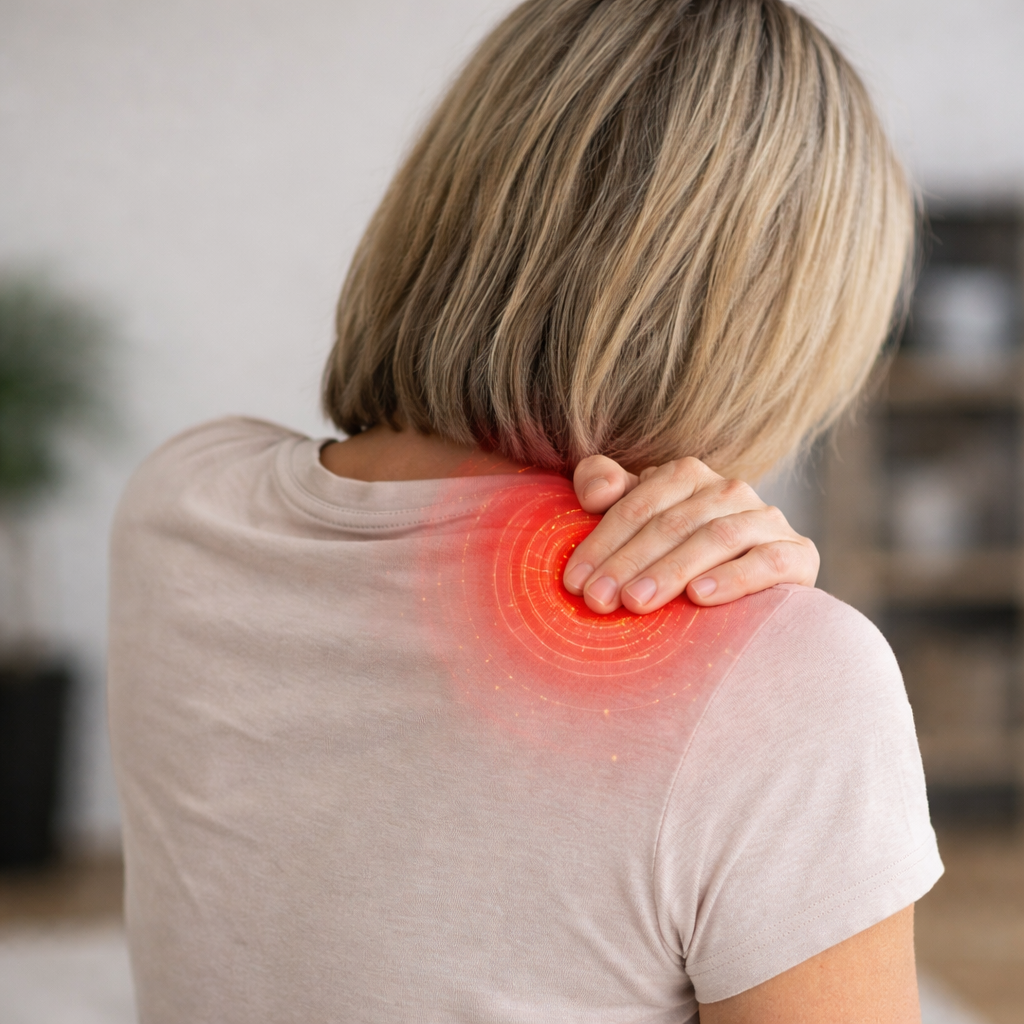
Frozen shoulder
It’s one of the most common painful issues I see in many of my midlife clients.
It often starts with a client saying they’ve “tweaked” their shoulder. There’s no obvious injury, but suddenly certain movements hurt — lifting the arm forward and up, out to the side, or reaching behind the body (often noticed when trying to do up a bra).
What’s often happening underneath is inflammation around the shoulder joint. Over time, that tissue can tighten and stiffen, leading to reduced movement and pain — often worse at night. As the shoulder loses mobility, many women also start to experience neck or upper-back discomfort from compensating without realising it.
Frozen shoulder is far more common in midlife women, particularly between 40 and 60. Hormonal changes during perimenopause and menopause play a big role here — hormones like oestrogen help regulate inflammation and support joint and connective tissue health. When levels fluctuate or decline, tissues can become more sensitive and slower to recover.
What we do next depends on how long the symptoms have been there and how severe they are.
• If it’s early and manageable, we focus on gentle, controlled movement to maintain range of motion and see how the shoulder responds.
• If pain is severe or affecting daily life, I’ll always recommend seeing a physiotherapist or doctor for proper assessment and guidance.
A Personal Trainer that can support you through this process and help you on the road to recovery and is one of the best ways of ensuring you move through this and re-gain movement and reduce pain and inflammation.
Why my mum changed the way I think about ageing
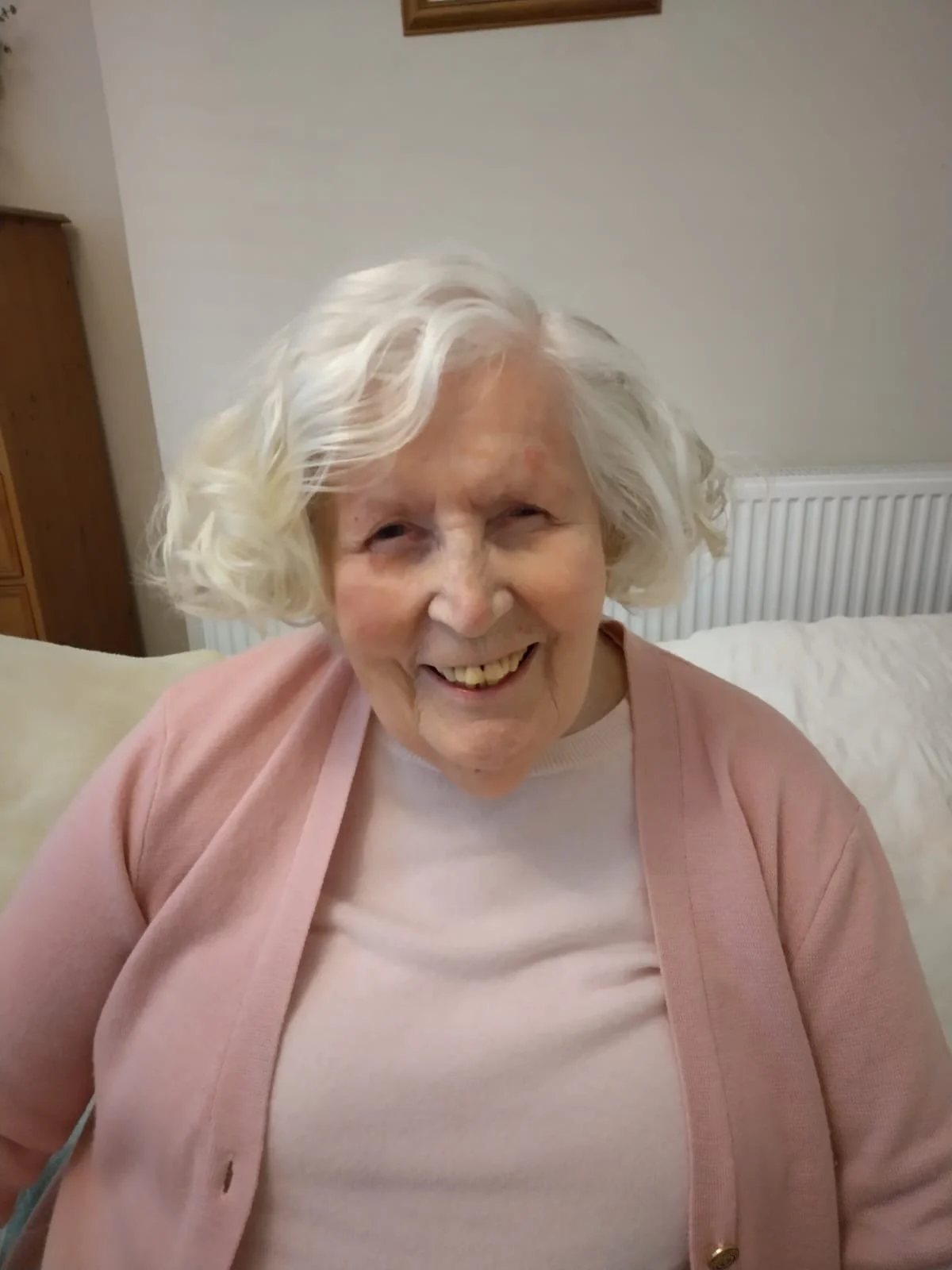
Watching her lose her mobility after a hip fracture made me ask a hard question…..
What do I want my later years to look like?
Here she is, approaching her 94th birthday. Amazing, right?
But the truth is, the last eight years haven’t been easy. When my mum broke her hip at 89, everything changed.
That moment became a turning point for her — and for me too.
Our family history is full of women with fragile bones. Sadly, many experienced falls that led to serious fractures and shortened lives.
When my mum broke her hip, I booked a bone scan. The result? Osteopenia — early bone density loss. Not uncommon, but still a wake-up call.
Half of women over 50 will experience a bone fracture. So I knew this wasn’t just my issue. And as they say — information is power.
I knew I had to change things:
• Less sitting behind a desk
• More focus on building muscle strength
• Better nutrition (yes… more protein!)
Bone and muscle work together — they’re part of the same ecosystem. When you strengthen one, you support the other.
The good news? Its working. My most recent bone scan shows improvement, or no decline, across all key markers. And now I get to help peri- and menopausal women do the same.
My mum is my inspiration — but this journey is also about choice. I don’t want to end up frail or fearful of movement. I’m not interested in being “beach-body ready”.
I want to stay strong enough to travel, meet friends, lift bags, climb stairs — and live fully for as long as I can.
That’s what strength training really gives us 💪✨
Five things I learnt becoming a PT in my 50s
What I wished I knew when I made the change…
A midlife career change can feel both exciting and terrifying — especially if you’re considering changing careers in your 40s or 50s. Many women reach this stage of life feeling ready for something new, but unsure where to start or how realistic the transition really is.
When I stepped away from my previous career to retrain as a Personal Trainer in my 50s, I had no roadmap. Looking back, there are some key lessons I wish I’d fully understood before making the leap. If you’re thinking about a second career in midlife, these are five things worth knowing first.
1. Don’t Give Up Your Day Job Too Quickly
If you’re planning a midlife career change, avoid leaving your current role too soon if you can help it.
I initially left work to give myself space to reset and think about what I wanted to do next. That time helped me realise I wanted to retrain as a Personal Trainer. While I did some contracting work alongside my training, trying to retrain in a completely different career while starting a new contract created unnecessary stress.
A career change in midlife already requires mental, emotional, and financial energy. Removing financial pressure where possible allows you to make clearer, more confident decisions.
2. Spend Time With People Already Doing the Job
One of the most valuable steps when changing careers in midlife is learning from people already established in that field.
I was incredibly fortunate to have experienced Personal Trainers in the studio who allowed me to shadow their sessions, ask questions, and understand how the job works in reality — not just in theory. Watching how they trained clients, managed their schedules, and built relationships accelerated my learning enormously.
If you’re retraining in midlife, seek out real-world exposure. It will save you time, mistakes, and frustration.
3. Be Realistic About Time, Money, and Expectations
Many people underestimate how long a midlife career change takes.
I had no real understanding of how long it would take to build a sustainable client base — or how financially challenging the first year could be. I was lucky to have savings to support myself, but even then, it wasn’t easy.
I recently read that around 80% of Personal Trainers leave the industry within their first year. While I don’t know how accurate that figure is, I understand why it happens. My first-year income wouldn’t have covered my mortgage.
If you’re considering a second career, take a hard look at your finances and ensure you have enough set aside to support yourself during the transition.
4. Keep Learning and Define Your Specialism
Retraining doesn’t end once you qualify.
As part of my midlife career change, I continued investing in education, including qualifications in pre- and post-natal exercise and menopause. As a menopausal woman myself, I had to learn how to support my changing body — managing weight shifts, understanding the benefits of HRT, and adjusting my nutrition to sustain a physically demanding role in my 50s.
Your lived experience in midlife can become your strongest professional asset. Let it shape your niche.
5. Learn the Tools That Support Your New Career
Modern career changes require more than technical skills.
Social media, websites, online booking systems, and AI tools play a huge role in building a successful second career. I avoided this area for far too long, until working with a social media and website coach helped everything click.
As a coach myself, I know the power of guidance — and I wish I’d sought that support sooner. You don’t need to master everything, but you do need to engage with the tools that help your business grow.
Finally - Enjoy the Process (Even When It’s Uncomfortable)
A midlife career change isn’t a straight line.
Looking back, I’m proud of how far I’ve come — from retraining, to building a client base, to creating a website and writing this blog. There is still so much further to go, and that’s okay.
Changing careers in your 40s or 50s isn’t just about work. It’s about building a life and career that fits who you are now — and that, for me, has been worth every step.